You Won’t Believe What I Found in San Miguel’s Art Scene
San Miguel de Allende isn’t just another pretty colonial town—it’s a living canvas. From cobblestone alleys humming with creativity to workshops where artisans shape magic by hand, this Mexican gem pulses with artistic soul. I went looking for inspiration and walked away with stories, colors, and one unforgettable handmade treasure. If you’ve ever wanted to feel art instead of just see it, this place will rewrite your travel rules.
The Art That Breathes Through the Streets
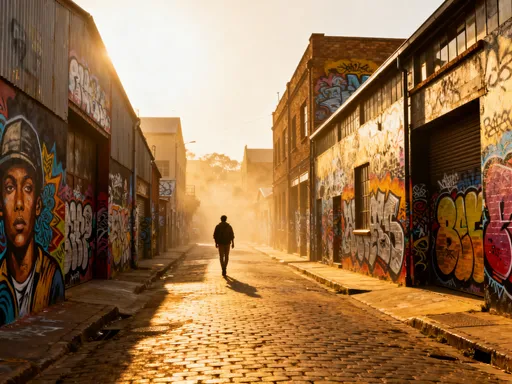
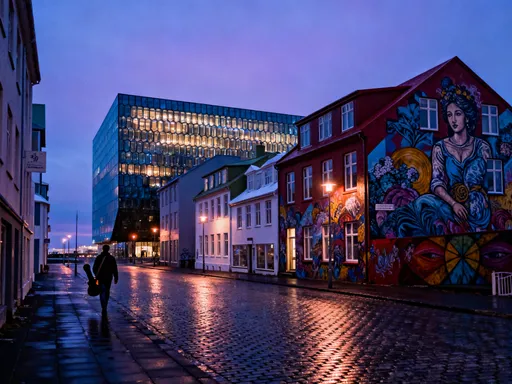
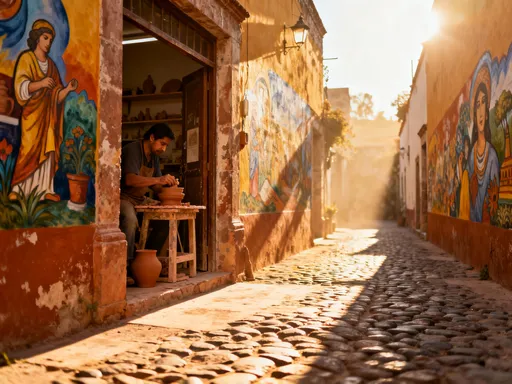
Walking through San Miguel de Allende feels like stepping into a painting that never stops evolving. The city’s colonial-era buildings, with their ochre, terracotta, and soft pink façades, serve as natural backdrops for an ever-changing gallery of street art. Murals stretch across entire walls, their bold colors and intricate storytelling capturing indigenous myths, revolutionary history, and everyday life with equal reverence. These aren’t tourist gimmicks; they are expressions of identity, community pride, and cultural continuity. In neighborhoods like Centro and Guadalupe, art isn’t confined to galleries—it spills onto sidewalks, wraps around doorways, and climbs stairwells like ivy. A simple errand can turn into an impromptu gallery tour when a towering fresco depicting a woman holding a basket of marigolds stops you in your tracks.
What makes San Miguel’s street art so compelling is its authenticity. Unlike cities where murals are commissioned by tourism boards, here the artwork often emerges organically. Local collectives and independent artists claim forgotten walls, transforming neglected spaces into vibrant testaments of creativity. Sculptures, too, appear unexpectedly—a bronze figure reading a book on a park bench, a whimsical metal bird perched atop a lamppost. These pieces invite interaction, not just observation. Children climb onto sculptures during afternoon strolls, and couples pause beneath archways painted with blooming jacarandas. The city’s art is not preserved behind glass; it is lived in, touched, and reshaped by the rhythms of daily life.
San Miguel’s magnetic pull for artists dates back decades. After World War II, American veterans on the G.I. Bill discovered the town’s low cost of living, mild climate, and stunning architecture, drawing them to study at the Instituto Allende. What began as an influx of foreign painters soon merged with local traditions, creating a unique fusion of Mexican craftsmanship and international modernism. Today, that legacy thrives. The city hosts over 20 art schools and more than 100 galleries, making it one of Latin America’s most concentrated artistic communities. Yet despite its acclaim, the atmosphere remains welcoming, not pretentious. Artists work openly in their studios, often with doors ajar, inviting passersby to peek inside. This openness dissolves the barrier between creator and observer, turning the entire town into a shared creative space.
Behind the Canvas: Meeting the Makers
The soul of San Miguel’s art scene lives in the hands of its artisans. These are not distant figures whose work appears only in catalogs or auction houses—they are neighbors, teachers, and storytellers who shape the town’s creative identity every day. In a narrow alley off Calle Canal, a ceramicist named Elena works at a wooden table, shaping clay into delicate bowls with movements refined over 40 years. Her studio, a converted 18th-century stable, smells of damp earth and wood smoke. Sunlight filters through a skylight, illuminating shelves lined with hand-glazed plates, each painted with floral patterns inspired by her grandmother’s embroidery.
Artisans in San Miguel are custodians of tradition. Many come from families where craftsmanship has been passed down for generations. In the textile district near Fabrica La Aurora, weavers use pedal looms that have been in their families since the 1950s. One weaver, Doña Rosa, explains how her mother taught her to spin wool using natural dyes made from cochineal insects, pomegranate rinds, and indigo plants. “Each color has a memory,” she says, holding up a skein dyed deep crimson. “This red is the color of our ancestors’ courage.” These stories are woven into every piece, making them more than decorative objects—they are cultural records, silently narrating centuries of resilience and beauty.
Visitors are often welcomed into these intimate spaces. Many studios offer open hours or brief demonstrations, allowing guests to watch the creative process unfold. In a small painting atelier near Parque Juárez, an artist applies thin layers of oil paint to a canvas depicting a market scene. “I build the light slowly,” he explains. “Like dawn breaking.” There is no rush, no assembly line. Each stroke is deliberate, each piece a labor of patience. These encounters shift the way travelers experience art. Instead of seeing a finished product in a shop, they witness its birth—the smudged hands, the quiet concentration, the occasional sigh of satisfaction. This connection fosters deeper appreciation and makes the eventual purchase feel meaningful, not transactional.
Specialty Products That Tell a Story
San Miguel’s artistry is best understood through its handmade goods—objects that blend utility with profound cultural meaning. Among the most treasured are Talavera tiles, their glossy surfaces painted with intricate geometric and floral designs. Authentic Talavera is made using a centuries-old technique originating in Puebla but embraced and adapted in San Miguel. Each tile is hand-formed, hand-painted, and fired multiple times to achieve its signature luster. The patterns often carry symbolic meaning: zigzags represent water, spirals echo the movement of life, and birds symbolize freedom. When installed on a kitchen backsplash or garden wall, these tiles don’t just decorate—they tell a story of heritage and continuity.
Equally distinctive are the textiles crafted using pre-Hispanic weaving methods. Rebozos, the traditional shawls worn by Mexican women, are still made by hand on backstrap looms. The threads are dyed with natural pigments, a process that can take weeks to complete. One artisan collective in the outskirts of town specializes in embroidery that incorporates Nahua symbols—feathered serpents, sun wheels, and corn motifs—each stitch a nod to indigenous cosmology. These garments are not mass-produced replicas; they are slow-made, one-of-a-kind pieces that carry the rhythm of the weaver’s breath and the weight of history.
Silver jewelry is another hallmark of San Miguel’s craft economy. Artisans source silver from mines in nearby Guanajuato, shaping it into earrings, necklaces, and cuffs using hand tools passed down through generations. Unlike commercial jewelry, these pieces often feature organic textures—hammered finishes, rough edges, and asymmetrical designs that celebrate imperfection. Many incorporate stones like obsidian, jade, or amethyst, chosen for their spiritual significance as much as their beauty. When you hold one of these necklaces, you feel its weight, its warmth, its humanity. It is not merely an accessory; it is a wearable heirloom.
Where to Discover Hidden Creative Gems
While the main plazas of San Miguel draw crowds, some of the most inspiring artistic experiences lie off the beaten path. A short walk from the bustling Jardín Allende, tucked behind a rusted iron gate, is a tiny bookbindery where an elderly craftsman restores antique volumes and creates hand-bound journals from recycled leather and handmade paper. Each book is unique, its cover tooled with floral patterns or pressed with dried marigolds. He works in silence, his hands moving with the precision of a surgeon, and visitors are welcome to watch as long as they respect the quiet.
Further into the Guadalupe neighborhood, a printmaker revives 19th-century techniques using a foot-powered press. His prints—etchings of old San Miguel streets, portraits of local elders—are pulled one at a time, each impression slightly different, bearing the subtle imperfections of human touch. He sells them at cost, more interested in preserving the craft than in profit. These kinds of spaces are not advertised on billboards or listed on mainstream travel apps. They are found through word of mouth, local maps from cultural centers, or simply by following the scent of turpentine and beeswax through quiet alleys.
Another hidden gem is a mural collective that transforms abandoned buildings into community canvases. Every few months, they invite artists—both local and visiting—to contribute to a new project. One recent installation, on the side of a disused bakery, depicts a tree with roots shaped like clasped hands, its branches blooming with children’s drawings. The message is clear: art grows from connection. These spaces thrive because they are protected by the community. Residents advocate for their preservation, and the city government often supports them through small grants. For travelers, finding these places feels like uncovering a secret, a reward for curiosity and respect.
Markets That Celebrate Craft, Not Commerce
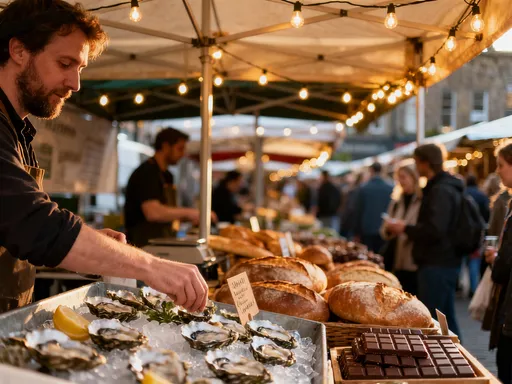
San Miguel’s markets are not crowded bazaars selling mass-produced trinkets. They are living cultural hubs where art and community intersect. The weekly tianguis, or open-air market, in the El Picacho neighborhood is a prime example. Held every Sunday, it features dozens of vendors, each offering handmade goods—woven baskets, painted ceramics, embroidered blouses, and hand-carved wooden toys. What sets it apart is the direct connection between maker and buyer. There are no middlemen, no plastic-wrapped imports. If you ask about a piece, the artisan will tell you how long it took to make, what materials were used, and why they chose its design.
Permanent artisan fairs, such as the one at Fabrica La Aurora, maintain the same ethos. This former textile factory has been transformed into a cultural complex housing studios, galleries, and a central courtyard market. Vendors rotate weekly, ensuring fresh offerings and seasonal themes. During Dia de Muertos, for example, the market fills with handcrafted sugar skulls, papel picado banners, and miniature altars. The atmosphere is festive but not commercialized—musicians play soft guitar melodies, children sip atole from clay cups, and elders share stories beneath shaded arches.
Sensory details enrich the experience. The air carries the scent of beeswax used to polish wooden bowls, the earthy aroma of fresh clay, and the faint sweetness of dried herbs bundled for tea. Textures invite touch: the rough weave of palm fronds in a hat, the smooth coolness of a polished stone pendant, the softness of a hand-loomed scarf. Bargaining is not expected; prices reflect the time, skill, and materials invested. Most vendors accept cash, though some now use mobile payment apps. For travelers, carrying purchases safely is part of the journey—bubble wrap and cardboard boxes are readily available at packing stations near market exits.
How to Experience Art Like a Local
To truly connect with San Miguel’s art scene, one must move beyond observation to participation. Fortunately, the city offers countless ways to engage, regardless of skill level or budget. Short workshops are widely available—pottery classes where you shape clay on a wheel, painting sessions guided by local artists, or textile dyeing demonstrations using natural pigments. These are not tourist performances but genuine learning experiences, often held in working studios. A two-hour ceramics class might cost less than a fine dining meal, yet it leaves a far more lasting impression.
Attending a vernissage, or gallery opening, is another way to immerse yourself. Many galleries in Centro host monthly exhibitions, often accompanied by live music, wine, and conversation. These events are open to the public and attract a mix of locals, expatriates, and visitors. There’s no pressure to buy; the focus is on sharing and celebrating creativity. Some galleries even offer guided tours in English, providing context about the artists and their techniques. For those with limited time, themed walking tours led by artists or art historians offer a curated introduction to the city’s creative landscape. One popular tour, “Colors of San Miguel,” traces the evolution of local art through murals, architecture, and studio visits.
The goal of these experiences is not mastery but connection. When you paint a small tile under the guidance of a master artisan, you gain a new appreciation for the patience and precision required. When you weave a few rows on a loom, you understand why a single rebozo can take months to complete. These moments transform art from something you consume into something you carry within you. They remind us that creativity is not reserved for the talented few—it is a universal language, accessible to anyone willing to try.
Bringing the Art Home—Mindfully
Leaving San Miguel without a piece of its art feels incomplete—but the act of choosing what to bring home should be thoughtful, not impulsive. The best souvenirs are not the cheapest or the flashiest, but those that resonate personally and honor the craft. A small painted box, a hand-stitched table runner, or a silver pendant can become a daily reminder of the people, stories, and beauty encountered. The key is intentionality: selecting items that reflect genuine appreciation rather than mere decoration.
Equally important is ethical sourcing. Travelers should seek out pieces made by the artisans themselves, not imported imitations sold in souvenir shops. Look for signs of handcrafting—slight irregularities in shape, variations in color, or visible brushstrokes. Ask questions: Who made this? How long did it take? Is the material sustainably sourced? Many artisans are happy to share their process, and this dialogue enriches the value of the object. Supporting authentic craft ensures that traditions continue and that creators are fairly compensated.
Practical considerations matter, too. When bringing handmade goods across borders, travelers should be aware of customs regulations. Ceramic pieces, textiles, and jewelry made from natural materials may require documentation, especially if they contain plant fibers, animal products, or precious metals. Packing fragile items requires care—bubble wrap, sturdy boxes, and padding with clothing in luggage can prevent damage. Some airlines allow fragile items as carry-ons if properly secured, but it’s wise to check policies in advance. Ultimately, the journey of a handmade piece from San Miguel to your home is part of its story—a bridge between cultures, preserved with care.
San Miguel de Allende teaches us that art isn’t something you view from a distance—it’s something you live, touch, and carry forward. By choosing to engage deeply, travel mindfully, and support real creators, we don’t just collect objects; we become part of a legacy. Your next journey could be more than a getaway—it could be a creative awakening.