Lost in the Magic of Santorini’s Hidden Flavors
You know what? Santorini isn’t just about sunsets and white-washed churches. I stumbled upon something way deeper—its soul lives in the local products you can’t find anywhere else. From volcanic wines that taste like history to creamy fava nobody talks about, this island surprised me at every turn. If you think you know Santorini, think again. The real magic is in the details most tourists completely miss. Beyond the postcard-perfect vistas lies a quieter, richer world shaped by generations of resilience, tradition, and deep connection to the land. This is not a destination to be seen only through a lens, but one to be tasted, touched, and truly felt.
First Impressions: Beyond the Postcard Views
When travelers arrive in Santorini, they are often overwhelmed by the dramatic caldera views, the striking contrast of white buildings against the deep blue Aegean Sea, and the golden hues of sunsets that seem to set the sky on fire. These sights are undeniably breathtaking and have earned the island its place among the most photographed destinations in the world. Yet, for all its visual splendor, the essence of Santorini remains hidden beneath the surface, tucked away in village alleyways, family-run farms, and small workshops where tradition is kept alive with quiet pride.
While many visitors follow well-trodden paths from Oia to Fira, stopping only for photos and souvenirs, a deeper experience awaits those willing to look beyond the obvious. The island’s true character emerges not in crowded viewpoints, but in the rhythm of daily life—the baker pulling warm loaves from a wood-fired oven, the farmer tending to low-growing vines wrapped in baskets, the elderly woman hand-stitching lace on her porch. These moments, unscripted and unhurried, reveal a culture rooted in self-reliance, sustainability, and a profound respect for the land.
What makes Santorini so unique is not just its beauty, but its ability to thrive in a challenging environment. Carved by volcanic eruptions and shaped by centuries of adaptation, the island has developed a way of life that turns limitations into strengths. Water is scarce, the soil is mineral-rich but dry, and the winds are relentless. Yet from these conditions, the people of Santorini have cultivated a rich culinary and artisanal heritage that reflects both ingenuity and resilience. To truly understand the island, one must shift focus from sightseeing to savoring—engaging all the senses to uncover the flavors and crafts that tell its story.
The Taste of Volcanic Soil: Santorini’s Unique Agriculture
The foundation of Santorini’s distinctive flavors lies in its geology. The island is the remnant of a massive volcanic eruption that occurred over 3,600 years ago, and its soil remains rich in ash, pumice, and minerals. This volcanic terroir creates a growing environment unlike any other, one that demands adaptation from both plants and farmers. With little rainfall and intense sun, only the most resilient crops can survive—yet these very conditions intensify their flavor, resulting in produce celebrated for its depth and character.
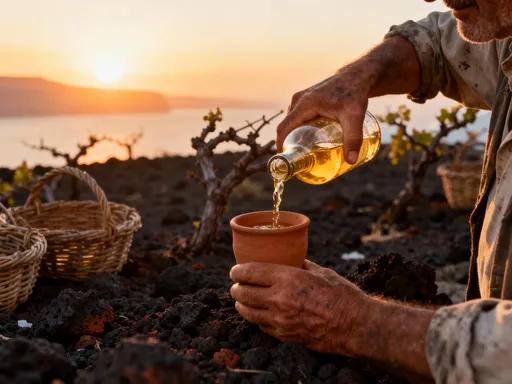
One of the most remarkable examples is the Assyrtiko grape, the star of Santorini’s wine production. Grown in low, basket-shaped vines called kouloura, the grapes are protected from the strong Meltemi winds and extreme heat. This ancient method, passed down through generations, allows the vines to draw moisture from the dew-rich air and store it in the soil. The result is a white wine with high acidity, a crisp minerality, and a saline finish that echoes the island’s proximity to the sea. Assyrtiko is not just a wine—it is a testament to survival, a liquid expression of the island’s history and environment.
Equally unique are the island’s cherry tomatoes and capers. Santorini’s tomatoes are small, intensely flavorful, and prized for their sweetness and depth. Grown without irrigation, they develop a concentrated taste that makes them ideal for tomato paste, a local specialty. Similarly, the island’s capers, harvested from wild plants clinging to volcanic rock, are larger and more aromatic than those found elsewhere. Picked by hand and often cured in salt, they add a bold, briny note to salads, seafood, and sauces. These ingredients, shaped by fire and wind, are more than just food—they are edible reflections of the island’s spirit.
A Sip of History: Visiting Local Wineries Off the Beaten Path
While Santorini is home to several well-known wineries that cater to tour groups, the most authentic wine experiences are found in smaller, family-run estates tucked into the island’s interior villages. These producers, often working with just a few acres of vineyards, continue to use traditional methods without irrigation, pesticides, or modern interventions. Their wines are not mass-produced; they are crafted with care, reflecting the personality of the land and the dedication of the vintner.
A visit to a winery in Pyrgos or Megalochori offers a chance to step into this world. The setting is often rustic—stone buildings with thick walls to keep the heat out, barrels aging in cool underground cellars, and terraced vineyards stretching toward the horizon. Here, a family member might guide you through a tasting, explaining how each vintage tells a story of sun, wind, and soil. The experience is intimate, unhurried, and deeply personal, a far cry from the commercialized tastings found near tourist hubs.
What sets these wines apart is not just their taste, but their connection to history. Many of these vineyards are over a century old, with vines that have survived phylloxera, droughts, and economic shifts. The winemakers speak of their work not as a business, but as a responsibility—to preserve a legacy and pass it on to future generations. When you sip a glass of Assyrtiko in such a place, you are not just tasting wine; you are drinking centuries of resilience, patience, and pride.
To make the most of these visits, it helps to approach them with curiosity and respect. Ask questions, listen to the stories, and take time to appreciate the process. Many wineries pair their tastings with simple, local foods—fresh bread, creamy feta, sun-dried tomatoes, or a dollop of fava. These pairings are not mere accompaniments; they are essential to understanding the harmony between land and table that defines Santorini’s culinary culture.
From Farm to Table: The Story Behind Santorini’s Fava
If there is one dish that captures the soul of Santorini’s cuisine, it is fava. But this is not the yellow split pea dip found in many Greek restaurants abroad. Santorini’s fava is made from a rare, indigenous variety of yellow lentil that grows only on the island, thriving in the volcanic soil and dry climate. Smaller and more aromatic than its commercial counterparts, this legume is slow-cooked for hours until it transforms into a silky, buttery puree with a delicate nutty flavor.
The process begins in the fields, where farmers plant the seeds in late winter, relying on winter rains rather than irrigation. The plants grow low to the ground, their roots digging deep into the mineral-rich earth. Harvesting is done by hand, a labor-intensive practice that ensures only the best pods are collected. Once dried and hulled, the lentils are stored in cloth sacks, ready for cooking.
In traditional tavernas, especially in quieter villages like Vourvoulos or Emporio, fava is prepared with minimal ingredients—just lentils, onion, and a generous drizzle of local olive oil. Sometimes it is topped with capers or a squeeze of lemon, but never overshadowed. Served warm with crusty bread, it is a dish of simplicity and depth, one that invites slow enjoyment. To taste it is to understand how scarcity can inspire excellence—how a lack of resources leads to a focus on quality, care, and flavor.
Yet fava remains one of Santorini’s best-kept secrets. Many tourists never encounter it, missing an essential piece of the island’s culinary identity. To seek it out is to engage with a tradition that values patience, seasonality, and connection to the land. It is not a dish made for speed or spectacle, but for savoring—a quiet reminder that the most meaningful experiences often come without fanfare.
Sweet Surprises: Honey, Sweets, and Local Delicacies
No exploration of Santorini’s flavors would be complete without indulging in its sweet offerings. Among the most prized is thyme honey, a golden, aromatic nectar harvested from bees that forage on wild herbs growing along the island’s cliffs and hillsides. Thyme honey from Santorini is bold and complex, with herbal notes and a slight bitterness that balances its sweetness. It is often drizzled over yogurt, used in desserts, or simply spread on fresh bread—a small luxury that speaks of the island’s natural abundance.
Beekeeping in Santorini is a centuries-old practice, supported by the island’s diverse flora and clean air. Many hives are placed in remote, sun-drenched areas where wild thyme, sage, and oregano bloom in abundance. The beekeepers, often elderly men with deep knowledge of the land, move their hives seasonally to follow the flowering cycles. Their work is quiet and steady, a rhythm attuned to nature’s pace.
Alongside honey, Santorini offers a variety of traditional sweets that reflect its history and hospitality. Baklava, made with thin, hand-stretched filo pastry and filled with chopped nuts and honey, is a favorite in local pastry shops. Unlike richer versions found elsewhere, Santorini’s baklava tends to be lighter, allowing the quality of the ingredients to shine. Equally delightful are spoon sweets—fruits like figs, quinces, or citrus preserved in sugar syrup and served in small glasses with a spoon. These treats, often offered to guests as a gesture of welcome, are a reminder of the island’s warm, generous spirit.
For those with a sweet tooth, seeking out these delicacies is more than a culinary pleasure—it is a way of connecting with local life. Whether buying honey from a roadside stand, sampling baklava at a family-run bakery, or accepting a glass of spoon sweet from a shopkeeper, these small moments create lasting memories. They are not staged for tourists, but offered with sincerity, a quiet invitation to share in the island’s traditions.
Handmade Treasures: Pottery, Weaving, and Artisan Crafts
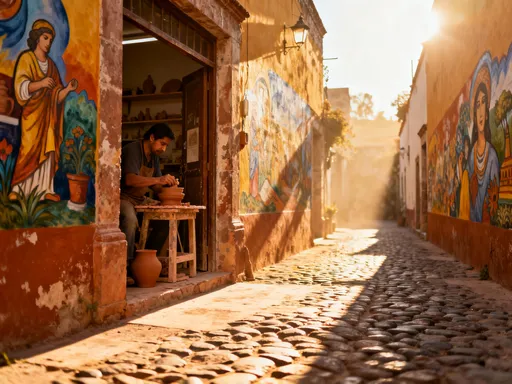
Santorini’s cultural richness extends beyond food to its artisan crafts, where creativity and heritage converge. One of the most enduring traditions is pottery, shaped by the island’s volcanic clay. In workshops in villages like Megalochori and Pyrgos, potters use age-old techniques to create functional and decorative pieces—jugs, bowls, and amphorae that echo ancient forms. The clay, rich in iron and minerals, gives the pottery a distinctive color and texture, while the firing process, often done in wood-burning kilns, adds to its uniqueness.
Visiting a pottery studio offers a chance to see this craft in action. The potter’s hands move with practiced ease, shaping the clay on a wheel or hand-building vessels using coiling methods. Some pieces are glazed with natural pigments, while others are left unglazed to highlight the raw beauty of the material. These items are not mass-produced souvenirs; they are functional art, made to be used and cherished.
Equally captivating is the tradition of lacework, known locally as kentima. This intricate craft, once a common skill among island women, involves hand-embroidering delicate patterns onto fine fabric using needle and thread. The designs often feature floral or geometric motifs, each stitch reflecting patience and precision. While fewer artisans practice this today, their work remains highly valued, and small shops or cooperatives continue to sell handmade lace table runners, napkins, and doilies.
Supporting these artisans is a meaningful way to honor Santorini’s culture. When you purchase a hand-thrown bowl or a piece of lace, you are not just acquiring a souvenir—you are preserving a tradition. These items carry the mark of the maker, the story of the island, and the weight of history. They are gifts of authenticity in a world increasingly dominated by the generic and disposable.
How to Discover These Treasures Yourself: Practical Tips
Experiencing the authentic side of Santorini requires a shift in mindset—from ticking off landmarks to embracing discovery. The good news is that the island rewards curiosity and slow travel. With a few thoughtful choices, visitors can move beyond the crowds and connect with the people, flavors, and crafts that define Santorini’s true character.
One of the best ways to explore is by renting a car or ATV. This allows you to venture into the island’s interior villages—Pyrgos, Megalochori, Exo Gonia—where life unfolds at a gentler pace. These towns are less polished than Oia or Fira, but they are rich in authenticity. Visit local markets, stop at family-run tavernas, and look for small signs advertising wine tastings or craft workshops. Often, the most memorable experiences come from unplanned encounters.
Timing also matters. Arriving early in the morning or visiting in the shoulder seasons—April to early June or September to October—can make a significant difference. The weather is pleasant, the light is soft, and the island feels more accessible. You’ll find wineries less crowded, markets more relaxed, and locals more open to conversation.
Speaking of locals, don’t hesitate to engage. A simple greeting, a question about a dish, or a compliment on a craft can open doors. Many islanders take pride in their heritage and are happy to share it with respectful visitors. Whether it’s a farmer explaining how fava is made or a potter demonstrating a technique, these interactions add depth to your journey.
Finally, prioritize supporting small producers. Buy wine directly from family estates, purchase honey from roadside stands, and choose handmade crafts over factory-made souvenirs. These choices not only ensure authenticity but also contribute to the sustainability of local traditions. When you spend your money mindfully, you become part of the story—a visitor who doesn’t just take, but gives back.
The Real Soul of Santorini
Santorini’s beauty is undeniable, but its soul is not found in postcards. It lives in the taste of a glass of Assyrtiko warmed by the sun, in the creaminess of a spoonful of fava, in the golden richness of thyme honey, and in the texture of a hand-thrown pot. It is felt in the quiet dignity of farmers, winemakers, and artisans who continue to honor their heritage with care and pride.
To visit Santorini is to witness a miracle of adaptation—a place where nature’s challenges have been transformed into cultural riches. The island does not offer easy answers or instant gratification. Instead, it invites patience, presence, and curiosity. It asks you to slow down, to listen, to taste, and to connect.
When you go beyond the views and seek out these authentic flavors and crafts, you don’t just visit the island—you become part of its story. You carry home more than memories; you carry a deeper understanding of what it means to live in harmony with the land. That connection, quiet and enduring, is what turns a trip into a true discovery. And that, perhaps, is the most magical sunset of all.