You Won’t Believe These Iguazu Falls Viewpoints — But Avoid This One Mistake
Standing at the edge of Iguazu Falls, the roar of water crashing below hits you before you even see it. What makes this natural wonder truly unforgettable isn’t just its size — it’s the viewpoints. I’ve walked every trail, from the thunderous Devil’s Throat to hidden paths with zero crowds. But here’s the catch: some spots waste your time. Let me show you which ones deliver magic — and which one you should skip, even if everyone else is going.
First Encounter with Iguazu: A Sensory Overload
Arriving on the Brazilian side of Iguazu Falls is like stepping into a living rainforest symphony. The air is thick with humidity, carrying the constant murmur of rushing water and the sharp calls of toucans echoing through the canopy. As you step onto the first viewing platform near the entrance, a wall of mist greets you, rising like steam from the jungle floor. Before long, the full breadth of the falls unfolds in a sweeping panorama — a horseshoe of white water plunging over a rocky cliff into the churning river below. It’s breathtaking, yes, but also overwhelming. The scale is impossible to grasp from photographs or videos; only in person does the sheer volume of water — over 1.7 million liters per second during peak flow — register in your bones.
These initial viewpoints, easily accessible just a short walk from the park entrance, are designed for impact. Wide, paved walkways lead to broad platforms that offer sweeping vistas across the falls’ most dramatic arc. From here, you can see dozens of individual cascades merging into a single thundering curtain. Yet, for all their grandeur, these spots often feel impersonal. Crowds gather shoulder to shoulder, cameras raised, while tour groups shuffle through in waves. The experience, while impressive, can feel distant — like watching nature through a museum window. You see the falls, but you don’t yet feel them. That deeper connection comes later, deeper into the trails, where sound, spray, and solitude pull you into the heart of the spectacle.
Still, these opening views serve an important purpose: they prepare you. They are the overture to a much longer performance. As your eyes adjust and your ears tune into the layered sounds — the deep bass of falling water, the hiss of mist, the occasional cry of a parrot — you begin to notice details. A rainbow forms and vanishes in the spray. A butterfly flutters past, undeterred by the damp air. The foliage glistens under a filtered sun. These early moments, though crowded, ground you in the reality of Iguazu as both a natural wonder and a living ecosystem. But to move beyond observation into immersion, you must go further. The real magic lies ahead, beyond the postcard angles and the busiest platforms.
The Devil’s Throat: Power You Can Feel in Your Chest
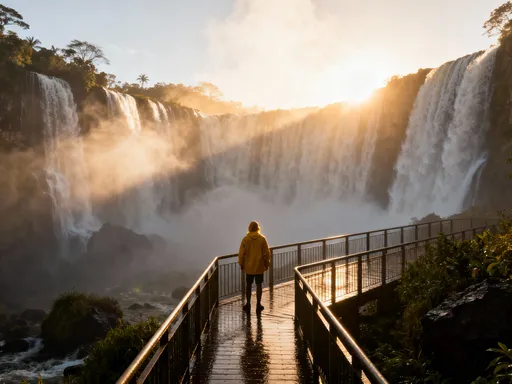
No visit to Iguazu Falls is complete without standing at the edge of the Devil’s Throat — the thunderous core where 14 separate waterfalls converge and plummet nearly 90 meters into a narrow canyon below. Reaching this iconic viewpoint requires a short but scenic train ride followed by a boardwalk that extends like a finger into the heart of the falls. As you walk, the sound grows louder, a deep, continuous roar that vibrates through the wooden planks and into your feet. The air thickens with mist, and soon, droplets begin to fall not from the sky, but from the saturated atmosphere itself. By the time you reach the final platform, you’re drenched — not from rain, but from the sheer force of water crashing below.
This is where Iguazu reveals its raw power. The Devil’s Throat is not something you merely see; it’s something you feel. The wind whips your clothes, the spray coats your skin, and the noise fills your head until it becomes a physical presence. Standing at the railing, looking straight into the churning abyss, you understand why the Guarani people once believed this place was inhabited by spirits. There is something primal here, a reminder of nature’s indifference and majesty. The viewing platform is engineered for safety, with sturdy railings and clear signage, but even so, the sensation of standing so close to such uncontrolled energy is humbling.
Because of its fame, the Devil’s Throat draws the largest crowds, especially between 10 a.m. and 3 p.m. To avoid the crush and experience the falls at their most atmospheric, arriving early in the morning is highly recommended. At dawn, the light is soft, the mist glows with subtle rainbows, and the number of visitors is manageable. You’ll have space to pause, to breathe, to let the moment settle in. Rain gear is essential — ponchos are available for purchase, but bringing your own high-quality waterproof jacket ensures better protection. And while the boardwalk is well-maintained, the constant moisture makes surfaces slick. Non-slip footwear is not just advisable; it’s necessary for safe passage. Despite the crowds, this viewpoint is non-negotiable. It is the soul of Iguazu, the place where water, wind, and wonder collide.
Upper vs. Lower Trails: What the Map Doesn’t Tell You
One of the most important decisions a visitor can make at Iguazu Falls is choosing between the upper and lower trail circuits — two distinct pathways that offer vastly different experiences. The upper trail, located on the Argentine side, winds along the top of the cliffline, providing elevated perspectives of the smaller, forested cascades that feed into the main falls. These viewpoints are more relaxed, with gentle slopes and shaded walkways that meander through lush vegetation. You’ll see water tumbling over moss-covered rocks, disappearing into narrow gorges, and forming quiet pools along the way. It’s a peaceful, almost meditative experience — perfect for those who want to appreciate the falls’ beauty without the intensity of close proximity.
In contrast, the lower trail plunges down to river level, placing you directly in front of the most powerful waterfalls. This path is more demanding, requiring steady stamina and good footwear. The descent involves stairs, narrow bridges, and exposed sections where the spray is constant. But the reward is unmatched: you stand eye-level with the crashing torrents, feeling the full force of the wind and mist. Some platforms are so close that the noise becomes all-consuming, blocking out conversation and thought. This is where Iguazu transforms from a sight to a sensation — where you don’t just watch the falls, but become part of their rhythm.
What the park maps don’t always emphasize is how weather affects these trails differently. The lower circuit is frequently closed during heavy rain or high water levels due to safety concerns. Slippery surfaces and strong currents make certain sections hazardous, and park rangers are quick to restrict access when conditions worsen. The upper trail, being elevated, remains open more often, though visibility can be reduced by fog and wind. For families with young children or those with mobility concerns, the upper trail is often the more practical choice. But for those seeking immersion, the lower trail is essential — provided it’s open and conditions are safe. Understanding this difference allows visitors to plan wisely, adjusting their route based on both physical ability and weather forecasts.
Hidden Angles: The Quiet Spots No Tour Guide Mentions
Beyond the main platforms and well-marked trails, Iguazu holds quieter corners — places where the crowds thin, the noise softens, and the experience becomes personal. These are not secret entrances or restricted zones, but overlooked clearings and side paths that most group tours bypass in their rush to the headline viewpoints. One such spot lies along a less-traveled stretch of the upper trail, where a small wooden bench is tucked beneath a canopy of bromeliads and ferns. From here, you can see a narrow cascade slipping silently between two rock faces, its flow delicate compared to the surrounding chaos. Another hidden vantage appears on the return path from the lower trail, where a slight detour leads to a narrow overlook with an unobstructed view of San Martín Falls — a lesser-known but deeply beautiful segment of the system.
What makes these places special is not just the view, but the stillness. Without the press of bodies or the chatter of tour guides, you begin to notice the subtleties: the way light shifts as clouds pass overhead, the sudden flash of a kingfisher darting through the mist, the soft hum of insects in the humid air. Rainbows form and dissolve in the spray, sometimes stretching all the way across the gorge. These moments are fleeting, intimate — not the kind of thing you can capture fully in a photograph, but the kind that stays with you long after you’ve left.
The key to finding these quiet spots is timing. Late afternoon, when most day-trippers have returned to their buses, is ideal. The light is warmer, the shadows longer, and the park takes on a more contemplative mood. Visitors who are willing to linger, to step off the main path, and to walk a little further are often rewarded with solitude. These moments of peace don’t diminish the power of the falls; they enhance it. They allow space for reflection, for gratitude, for simply being present. In a world of curated experiences and crowded attractions, these quiet corners of Iguazu remind us that true connection with nature often comes not from seeing more, but from seeing differently.
The Brazilian Side vs. The Argentine Side: A Viewpoint Comparison
One of the most common questions from first-time visitors is whether to visit the Brazilian or Argentine side of Iguazu Falls — or, ideally, both. Each offers a distinct perspective, shaped by geography, infrastructure, and park design. The Brazilian side, located in Iguaçu National Park, is known for its panoramic views. A single, well-maintained trail runs along the cliff edge, offering sweeping vistas of the falls’ entire width. From this vantage, you can appreciate the full scale of the system — the way the water spreads across the horseshoe formation, the way the mist rises like smoke over the treetops. It’s the best place to understand Iguazu as a whole, to grasp its immensity in a single glance.
However, the Brazilian side has fewer trails and less opportunity for close-up encounters. While the views are dramatic, they are also more distant. You see the falls, but you don’t feel immersed in them. The Argentine side, within Iguazú National Park, offers the opposite: intimacy. Its network of trails — upper, lower, and the path to the Devil’s Throat — allows visitors to move through the falls, getting close enough to feel the spray and hear the water’s roar in stereo. This side provides more variety, more angles, and more opportunities for exploration. It’s where you can walk behind a curtain of water, cross narrow bridges above churning rapids, and stand at the very edge of the abyss.
For those with limited time, the Brazilian side is an excellent introduction — ideal for those who want a broad overview without extensive walking. But for a deeper, more personal experience, the Argentine side is unmatched. The ideal itinerary, when time and logistics allow, is to visit both. Start early on the Argentine side to walk the lower trail and visit the Devil’s Throat before crowds build, then cross the border to the Brazilian side in the afternoon for the panoramic finale. This combination offers the complete picture: the intimacy of proximity and the awe of perspective. It’s the only way to truly understand why Iguazu is not just a waterfall, but a living landscape.
Common Mistakes Tourists Make at the Viewpoints
Even with the best intentions, many visitors leave Iguazu Falls feeling underwhelmed — not because the falls failed to impress, but because simple mistakes diminished their experience. One of the most frequent errors is arriving at midday. Between noon and 3 p.m., temperatures soar, humidity peaks, and the largest tour groups converge on the main platforms. The combination of heat, crowds, and direct sunlight can make walking the trails exhausting rather than enjoyable. Another common oversight is skipping the park map or failing to plan a route. Without a strategy, visitors often end up retracing steps, missing key viewpoints, or spending too long at less impressive spots.
Underestimating the walking distance is another pitfall. The trails, especially on the Argentine side, cover several kilometers and involve stairs, bridges, and uneven surfaces. Visitors wearing flip-flops or dress shoes quickly regret their choices as their feet slip on wet boards or ache from the terrain. Proper footwear — closed, non-slip shoes with good support — is essential. Similarly, many forget to bring water, sunscreen, or rain gear, only to find these items overpriced at park vendors. The climate is unpredictable; a sunny morning can turn into a downpour within minutes.
Perhaps the most overlooked mistake is treating all viewpoints as equally valuable. Some platforms offer nearly identical views, and spending too much time at each can tire you out before you reach the most powerful spots. Learning which viewpoints are must-sees — like the Devil’s Throat and the lower trail’s central overlooks — allows for smarter time management. Finally, rushing through the experience without pausing to absorb the moment means missing the emotional core of the visit. Iguazu is not just a checklist; it’s a journey. Avoiding these common errors ensures that your time here is not just seen, but truly felt.
Maximizing Your Visit: A Smart Route for True Impact
To make the most of your day at Iguazu Falls, a thoughtful, intentional route can transform a standard sightseeing trip into a profound experience. Begin early — ideally by 8 a.m. — on the Argentine side, when the air is cool and the trails are quiet. Take the park shuttle to the start of the lower trail and walk its full length, saving the Devil’s Throat for last. This approach builds in emotional intensity, moving from powerful individual falls to the climactic convergence of water and sound. The lower trail’s immersive perspectives set the tone, making the later views on the Brazilian side feel even more expansive by comparison.
After completing the Argentine circuit, cross into Brazil — a straightforward process with border checkpoints located within the parks. Arrive at the Brazilian side by early afternoon, when the panoramic platforms are well-lit and less crowded than in the morning rush. Walk the main trail at a leisurely pace, pausing at viewpoints that offer fresh perspectives on the falls you’ve just experienced up close. The contrast between proximity and distance will deepen your appreciation. If time allows, return to a favorite spot on either side later in the day, when the light is softer and the atmosphere more serene.
Throughout the day, prioritize your goals. If photography is your focus, aim for early morning and late afternoon light. If solitude matters most, avoid peak hours and explore side paths. If you’re traveling with family, balance energetic trails with rest stops and shaded areas. Not every platform requires equal attention — some are worth a quick glance, others a long pause. Moving with purpose, rather than simply following the crowd, allows you to engage more deeply with the landscape. In the end, the best way to experience Iguazu is not to see everything, but to feel something. When your route is guided by intention, the falls stop being just a destination — they become a journey of the senses.
Iguazu Falls isn’t just seen — it’s felt. The right viewpoints amplify that sensation; the wrong choices dilute it. By choosing wisely, avoiding common missteps, and moving with intention, you don’t just witness nature’s power — you become part of its rhythm.