You Won’t Believe What I Discovered in Chicago – A Cultural Deep Dive
Chicago isn’t just skyscrapers and deep-dish pizza. Beneath its bold exterior lies a vibrant cultural soul waiting to be explored. From underground jazz clubs to neighborhood murals that tell stories of resilience, I found myself immersed in moments that textbooks could never capture. This is more than a city—it’s a living canvas of music, art, and community. Let me take you through the authentic, unexpected, and deeply human side of Chicago.
Arrival in Chicago: First Impressions Beyond the Postcard
Stepping off the train at Union Station, the energy of Chicago greets you like an old friend with new stories to tell. The wind, famously sharp off Lake Michigan, carries whispers of industry, history, and reinvention. The skyline rises in the distance—a forest of steel and glass that has defined American architecture for over a century. Yet, within minutes of leaving the downtown core, the city transforms. Side streets unfold into neighborhoods where front porches are alive with conversation, children chase ice cream trucks through summer heat, and corner stores display hand-painted signs in Spanish, Polish, and Arabic.
Most visitors see Chicago through the lens of Millennium Park, Navy Pier, or the Willis Tower Skydeck—and these landmarks are undeniably impressive. But the city’s true depth lies just beyond the tourist trail. In neighborhoods like Bronzeville, Pilsen, and Rogers Park, culture isn’t performed; it’s lived. These are places where generations have built communities through shared struggle, creativity, and pride. It’s here that Chicago reveals itself not as a single entity, but as a patchwork of identities, each contributing to the city’s enduring spirit.
What struck me most was the contrast between the city’s polished image and its raw, beating heart. One moment, I was marveling at the reflective curves of Anish Kapoor’s Cloud Gate sculpture; the next, I was sipping café con leche in a family-owned bakery in Little Village, where the owner proudly showed me photos of her daughter’s quinceañera displayed beside black-and-white images of the neighborhood in the 1950s. This duality—between grandeur and intimacy—is what makes Chicago so compelling. It doesn’t ask you to love it for its postcard views, but for its authenticity, its resilience, and its people.
The Pulse of Music: From Blues to Underground Hip-Hop
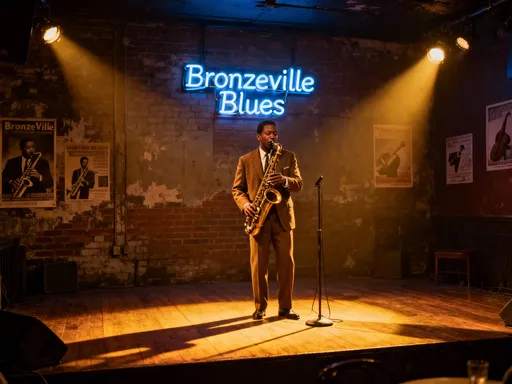
If Chicago has a heartbeat, it’s found in its music. The city gave birth to the electric blues, shaped gospel into a global force, and pioneered house music in the basements of South Side clubs. But beyond the history books, music here remains a living, breathing expression of identity and resistance. I began my journey in Bronzeville, once the epicenter of African American culture during the Great Migration. At a dimly lit club on 47th Street, a blues trio played with a rawness that felt both timeless and urgent. The guitarist, a man with silver hair and calloused fingers, leaned into the microphone and sang of lost love and hard times—his voice cracking with emotion that no studio could replicate.
What makes Chicago’s music scene unique is its deep connection to community. Unlike commercial venues that prioritize profit, many of these spaces are sustained by local support and passion. In Pilsen, I visited a youth-run music collective where teenagers recorded hip-hop tracks in a converted garage. The walls were covered in graffiti art, and the air buzzed with creative energy. A young rapper named Javier told me, “We don’t make music to get famous. We make it to tell our truth.” His lyrics spoke of immigration, gentrification, and hope—themes that echo through many of the city’s marginalized neighborhoods.
Chicago’s musical legacy isn’t confined to the past; it’s being rewritten every night in basements, community centers, and backyard stages. At a small jazz café in Hyde Park, I listened to a saxophonist play a haunting rendition of “A Night in Tunisia” while graduate students and retirees tapped their feet in unison. The owner, a retired schoolteacher, opened the venue to preserve the city’s jazz heritage. “Music keeps us human,” she said. “It reminds us we’re not alone.” In a city often defined by its size and pace, these intimate musical moments offer a profound sense of connection.
Street Art with a Story: Murals That Speak to the City’s Soul
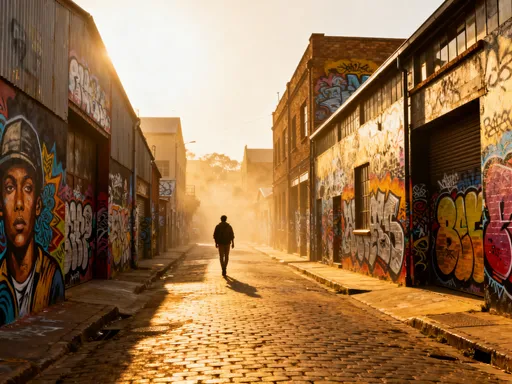
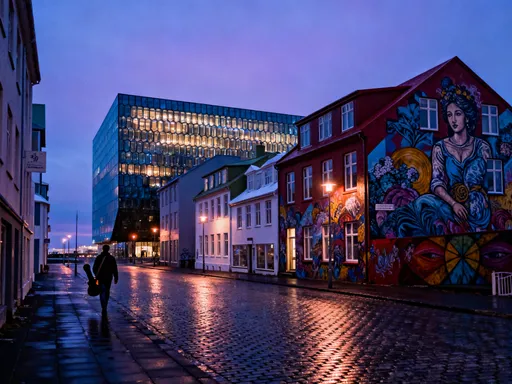
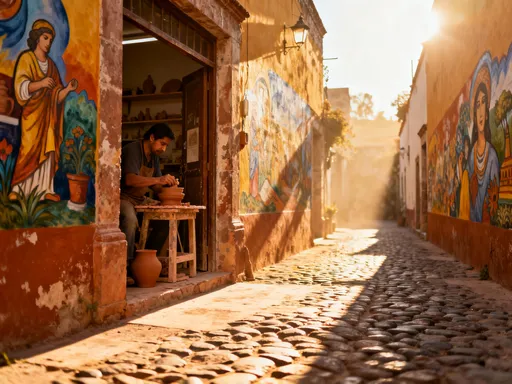
Walking through Humboldt Park, I was stopped in my tracks by a massive mural covering the side of a three-story building. It depicted a Puerto Rican family surrounded by tropical flora, the colors so vivid they seemed to pulse in the sunlight. A quote in bold letters read: “Sí se puede.” This wasn’t just decoration—it was a declaration of pride, resilience, and belonging. Across Chicago, street art serves as a public archive of community identity, where every brushstroke tells a story.
In neighborhoods like Little Village and Logan Square, murals are more than art—they’re acts of resistance and remembrance. One mural in Pilsen honors the Mexican Revolution with images of Emiliano Zapata and Frida Kahlo, intertwined with portraits of local activists. Another, in Bronzeville, commemorates the legacy of Black intellectuals like Ida B. Wells and Gwendolyn Brooks. These works are often created through community collaborations, with artists working alongside residents to ensure the stories told are authentic and meaningful.
What I found most moving was how these murals serve as gathering points. Parents point them out to children, tour groups pause for photos and explanations, and local leaders use them as backdrops for speeches about justice and change. In a city where gentrification threatens to erase long-standing communities, murals act as anchors—visual promises that certain histories will not be forgotten. They also invite dialogue. I spoke with a muralist named Elena, who told me, “When people stop to ask what the painting means, that’s when change begins. Art opens the door to conversation.”
Chicago’s street art is not curated behind glass or locked in galleries. It’s exposed to the elements, subject to time and weather, much like the communities it represents. Yet, its impermanence only adds to its power. Each mural is a temporary monument to something enduring—the human need to be seen, heard, and remembered.
Flavors of the City: Eating My Way Through Cultural Enclaves
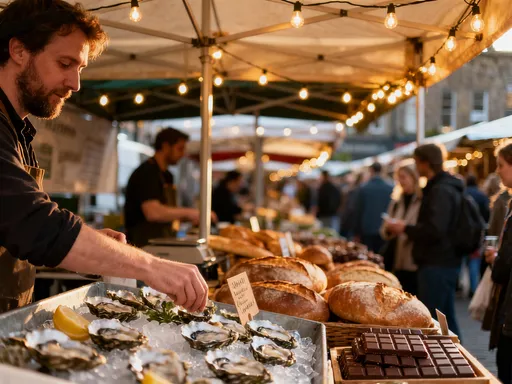
To understand Chicago, you must taste it. The city’s culinary landscape is a direct reflection of its immigrant roots and neighborhood pride. I started my food journey in Avondale, home to one of the largest Polish communities in the United States. At a small bakery called Polonia, the scent of freshly baked rye bread and paczki—Polish doughnuts filled with rosehip jam—filled the air. The owner, Mrs. Kowalski, has run the shop for over 40 years and still greets regulars by name. “My grandmother’s recipe,” she said, handing me a warm pastry. “No shortcuts. Just love and butter.”
Just a few miles away in Little Village, the aroma of grilled carne asada and fresh tortillas led me to a bustling taqueria tucked between a laundromat and a hardware store. Families gathered at plastic tables, sharing plates of tacos al pastor and horchata. The owner, Miguel, told me his father opened the stand in 1985 with a borrowed cart. “Now my son runs the second location,” he said with pride. “This food—it’s our story on a plate.” I tasted the smoky marinade, the slow-roasted pineapple, and understood what he meant. Each bite carried generations of tradition, adaptation, and survival.
In Bronzeville, I visited a soul food restaurant that has served the community since the 1960s. The menu featured classics like fried chicken, collard greens, and sweet potato pie—dishes rooted in African American history and resilience. The owner, Ms. Doris, explained that her recipes were passed down from her mother, who cooked for civil rights organizers during the movement. “Food brings people together,” she said. “When you eat here, you’re not just feeding your body. You’re honoring a legacy.”
Chicago’s food scene thrives not in Michelin-starred restaurants, but in these neighborhood gems—places where meals are made with care, memory, and pride. To eat in Chicago is to participate in a quiet act of cultural preservation, one plate at a time.
Hidden Cultural Hubs: Libraries, Centers, and Community Gatherings
While museums like the Art Institute draw international crowds, Chicago’s true cultural engines often operate under the radar. I discovered this in a modest community center in Rogers Park, where a weekly poetry slam brought together poets from Syrian, Indian, and African American backgrounds. The room was packed, the air thick with anticipation. A young woman stepped forward and recited a poem about her grandmother’s journey from Somalia, her voice trembling with emotion. When she finished, the room erupted in snaps and applause. This wasn’t performance—it was testimony.
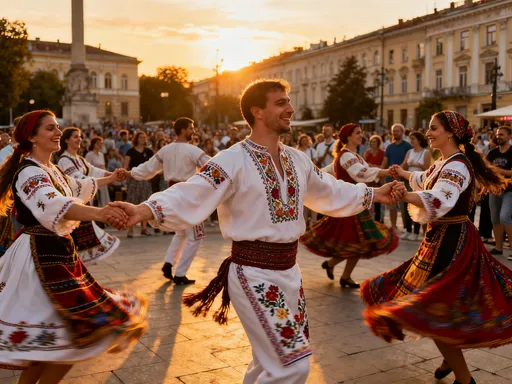
Across the city, libraries function as more than book repositories; they are cultural sanctuaries. At the Harold Washington Library, I attended a free dance workshop featuring traditional Mexican folklorico. Children in colorful skirts twirled across the floor, their movements precise and joyful. Nearby, in the Albany Park branch, a photography exhibit showcased images taken by refugee youth, each photo a window into lives shaped by displacement and hope.
These spaces thrive on accessibility and inclusion. They don’t require tickets or reservations—just presence. A Ukrainian cultural center in Edgewater hosts free language classes and embroidery circles, preserving traditions in a new land. In Chinatown, a community hall offers tai chi lessons and calligraphy workshops, connecting younger generations to their heritage. These hubs may lack the grandeur of downtown institutions, but they possess something more valuable: authenticity.
What unites them is a commitment to keeping culture alive through participation. They don’t treat art as a distant object to be observed, but as a shared practice to be experienced. In a world where digital life often replaces human connection, these spaces remind us of the power of gathering, creating, and belonging.
Seasons and Celebrations: How Chicago Lives Its Culture Year-Round
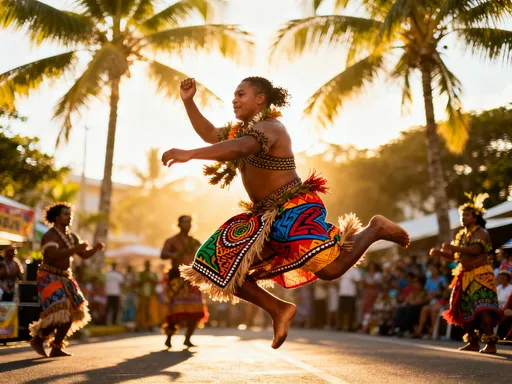
Chicago doesn’t just host festivals—it becomes them. As the seasons change, so do the city’s rhythms of celebration. In summer, the Puerto Rican Festival transforms Division Street into a vibrant corridor of music, dance, and food. Floats adorned with the coquí frog—a symbol of Puerto Rican pride—roll down the avenue as bomba and plena bands energize the crowd. Children wear face paint in the colors of the flag, and elders wave from folding chairs, smiling at the sight of tradition carried forward.
Later in the season, the Chicago Jazz Festival fills Millennium Park with soulful melodies, drawing thousands to picnic on the Great Lawn. Unlike ticketed concerts, this event is free—a democratic celebration of the city’s musical roots. I watched a young girl sway to a saxophone solo, her eyes closed, completely absorbed. Her grandfather, sitting beside her, whispered, “This is where it all began.”
Even in winter, Chicago finds ways to celebrate. The Christkindlmarket in Daley Plaza brings a touch of European tradition with handmade ornaments, mulled wine, and carolers in vintage attire. In Bronzeville, the annual Kwanzaa festival honors African American heritage with storytelling, drumming, and the lighting of the kinara. These events aren’t tourist attractions; they’re community rituals, open to all who wish to participate.
What makes these celebrations powerful is their inclusivity. They don’t ask you to be from a certain background to join—they invite you to witness, learn, and share. In a time when division often dominates headlines, Chicago’s festivals stand as quiet acts of unity, proving that culture, when shared, becomes a bridge rather than a barrier.
Why Immersive Travel Matters: Leaving the Tourist Path Behind
This journey through Chicago changed the way I think about travel. I arrived expecting landmarks and left with stories—stories of resilience, creativity, and connection. I realized that true cultural understanding doesn’t come from checking off attractions, but from slowing down, listening, and engaging with people on their own terms. Immersive travel isn’t about collecting experiences like souvenirs; it’s about forming relationships, however brief, with the places and people we encounter.
There is an ethical dimension to this kind of travel. When we venture beyond the tourist path, we support local economies, honor authentic traditions, and challenge the commodification of culture. We also confront our own assumptions. I had come to Chicago with a narrow view shaped by media and guidebooks. What I found was far more complex, beautiful, and human than I had imagined.
Immersive travel also fosters empathy. Sitting in a community center, listening to a refugee’s poem, or sharing a meal with a family in their home restaurant—these moments break down the us-versus-them mentality that too often defines our world. They remind us that, despite our differences, we share common hopes, fears, and dreams.
For women in their 30s to 50s—many of whom balance family, work, and personal growth—this kind of travel offers more than escape. It offers renewal. It reconnects us to our curiosity, our compassion, and our sense of possibility. It reminds us that learning never stops, and that the world is full of quiet heroes—artists, cooks, teachers, elders—who keep culture alive through everyday acts of courage and love.
Conclusion
Chicago taught me that culture isn’t something you see—it’s something you feel when you listen, taste, and participate. The city’s true magic lies not in its monuments, but in its people and their stories. From the blues echoing in a dimly lit club to the murals that rise like prayers on brick walls, from the warmth of a grandmother’s kitchen to the laughter at a neighborhood festival, Chicago breathes with a spirit that cannot be replicated.
This journey was not about ticking off attractions or capturing perfect photos. It was about presence. It was about allowing myself to be moved, surprised, and transformed. And in that transformation, I found a deeper truth: that travel, at its best, is not about escaping who we are, but discovering who we can become.
Next time you travel, go beyond the guidebook. Step into a community center, strike up a conversation at a family-run restaurant, let a mural tell you its story. Dive in. Listen closely. You might just find the world—and yourself—changed in the process.